
 INSYGMA NUTRITION
Product science / L-theanine
L-theanine · an amino acid from tea leaves
The science of L-theanine
What the studies measured and what they found.
Randomized trials only
In the trials: faster reactions after a single dose and slightly less stress.
This page only counts studies in which chance decides who takes L-theanine and who takes an identical capsule without it. It only counts L-theanine on its own: blends and tea are left out. The trials are almost all small, many with a single dose.
- 1 of 17
- benefit graded A or B
- 10 of 17
- results with no clear effect or with varied results
What is known
- BGood results Faster reactions A single dose, in attention tests Moderate effect
- CMixed results Slightly less stress A single dose, in a stressful situation Small decrease
- CMixed results Sleep Daily use Improved in a review; the trials disagree
L-theanine / Evidence in humans
How to read the grades, arrows and counts
The arrow shows the direction of the measure: down when the measure fell, for example stress. It turns green when the change is an improvement. When the size was assessed, 1, 2 or 3 filled arrows mean a small, moderate or large effect. The = sign means no clear difference.
Few studies: only 1 or 2 controlled trials measured this result. Mixed results: the trials disagree.
When sorting by effect, the result with the largest magnitude in each topic counts. In a tie, the better grade of that result counts first, then alphabetical order. “Largest improvement with L-theanine” considers benefits in comparisons where the effect of L-theanine can be isolated. “Largest measured effect” also includes markers and combined treatments.
The grade says how well it works: A, it works and is well studied; B, good results; C, few studies (only 1 or 2 controlled trials measured this result) or mixed results (the trials disagree); D, no clear effect. For safety, A and B mean it does not increase risk, C that there are doubts and F that it increases risk. The grade comes from fixed rules: the size of the effect in the main review, the number of trials and people, and the agreement between trials.
The three arrows point in the direction of the measure. For example, a shorter walking time points down. When the record documents the magnitude, one, two or three dark arrows correspond to a small, moderate or large effect. For other changes, one dark arrow shows only the direction. For standardized mean differences, the descriptive benchmarks are 0.2, 0.5 and 0.8 in absolute value.
The = sign means the test did not detect a difference. “Varied results” means the results diverged between studies, tests or time points. For case reports, the table states what was observed. The counts are of publications; one trial can give rise to several articles.
The records summarize the full text of each article; those that could only be based on the abstract say so under limitations. As there are few trials of L-theanine on its own, all those that measured each result are shown.
| Topic | Measured result | Grade | Effect | Evidence |
|---|
A single dose or every day?How it was studied Almost everything is a single dose See details
What do the trials show?
Most trials give a single dose, almost always between 50 and 400 mg, and then measure attention or the reaction to a stressful situation straight away. This is where the most solid result lies: reactions become faster, moderately so.
With daily use, for 2 to 12 weeks, there are few trials: stress, memory and attention did not improve more than with placebo. The new INSYGMA product will contain 300 mg per capsule, within the doses studied.
See the attention studiesL-theanine and sleepDaily use Improved in a review; the trials disagree See details
Does L-theanine help you sleep?
A 2025 review separated the trials with L-theanine alone: overall sleep quality improved, but the trials disagree a lot and one trial in cancer patients carries more weight than the others; the time to fall asleep and the time spent asleep did not change. With 200 mg a day, the time to fall asleep improved by a minimal margin in healthy adults, but the total sleep score did not change; insomnia improved in cancer patients. In people with anxiety, insomnia did not change overall. In a trial with 400 mg a day, a wristband measured less time asleep and perceived sleep was the same as with placebo.
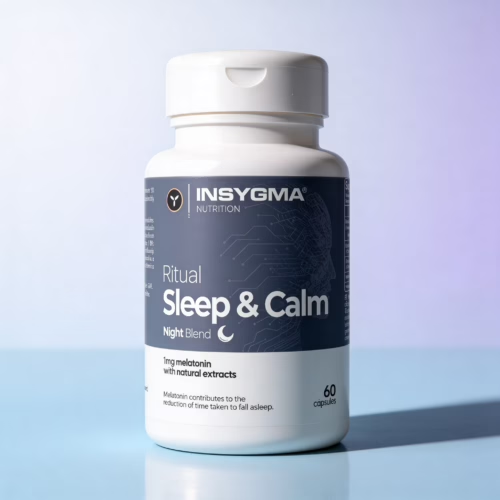
In children with ADHD, a trial with 98 boys showed more efficient sleep. This page covers only L-theanine on its own; the Sleep & Calm Formula adds melatonin, lemon balm and GABA.
See the sleep studiesL-theanine with caffeineMany studies combine the two This page does not count those See details
Why were they left out?
Many studies give L-theanine with caffeine, as in tea. In those, the effect of L-theanine cannot be isolated. We only counted the groups that took L-theanine without caffeine. In athletes, the gains came from the combination; L-theanine on its own did not improve performance.
See the sport studiesIs it safe?Side effects No serious effects in the trials See details
What was seen in the trials?
In a review of 31 trials, there were no serious side effects with L-theanine, and dropouts were similar to placebo in 15 trials, although that count includes the same trial twice. Headache, diarrhea, nausea and stomach ache did not clearly increase, but they were only counted in 2 to 4 trials. In a 28-day trial with 400 mg a day, there were 8 mild complaints in 5 people with L-theanine (such as a metallic taste or dry mouth) and 1 with placebo, and lab tests and vital signs did not change in any relevant way. In a trial in boys with ADHD, one boy taking L-theanine had a facial tic and left the study; he had had tics before, and the investigator considered it unlikely to be due to L-theanine. In a single-dose trial with 250 mg, headache ratings went up.
In patients, L-theanine was taken together with antidepressants and antipsychotics. If you take medicines, talk to your doctor before adding a supplement.
See the safety studiesFrequently Asked Questions
Does L-theanine calm you down?
A little, in a stressful situation.
In a review of 31 trials, a single dose slightly lowered the stress of a difficult situation; the effect depended mainly on studies with a higher risk of error. With daily use, the same review did not see stress fall more than with placebo (2 trials).
See the stress studiesDoes it help you sleep?
Sleep quality improved in a review.
A 2025 review that pooled only the trials of L-theanine alone saw sleep quality improve, but those trials disagree a lot with one another. In some trials the time to fall asleep or insomnia improved, and in others nothing changed.
See the sleep studiesDoes it improve concentration?
Yes, right after a single dose.
In a review of 31 trials, a single dose of L-theanine made reactions faster in attention tests, moderately so. With daily use, 3 small trials saw no difference in memory or attention.
See the attention studiesDoes it help with anxiety or depression?
In depression, one trial had good results.
In one trial, adding L-theanine to an antidepressant lowered depression symptoms more; it is a single trial. In a trial in people with generalized anxiety, L-theanine did no better than placebo.
See the studiesWhat dose was studied?
From 50 to 900 mg a day.
The most studied single dose is 200 mg. With daily use, the trials used 100 to 900 mg. The new INSYGMA product will contain 300 mg per capsule.
See the dose studiesIs it safe?
Yes.
L-theanine comes from tea leaves. In a review of 31 trials there were no serious side effects, and headache, diarrhea and nausea did not clearly increase. If you take medicines, talk to your doctor before adding a supplement.
See what is knownINSYGMA Labs · 11 November 2026 · Back to top ↑