
 INSYGMA NUTRITION
Product science / Vitamin C
Vitamin C · ascorbic acid and ascorbates, by mouth
The science of vitamin C
What the studies measured and what they found.
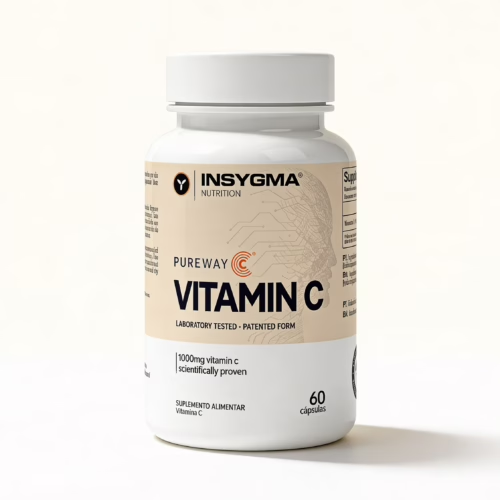
Randomized trials only
In the trials: milder colds, less chronic pain after a wrist fracture and slightly lower blood pressure.
People who eat more fruit and vegetables have more vitamin C, but they also tend to have other healthy habits. To find out what the supplement does, the only useful studies are those in which chance decides who takes vitamin C and who takes an identical tablet without it. This page counts only those, and only with vitamin C taken by mouth.
- 7 of 40
- benefits graded A or B
- 26 of 40
- results with no clear effect or with varied results
What is best confirmed
- BGood results Fewer colds in people under intense physical stress Marathon runners, skiers, soldiers About half
- BGood results Less chronic pain after a broken wrist 500 mg a day for 50 days About half the cases
- BGood results Slightly lower blood pressure 29 short trials, 500 mg a day About 4 mmHg systolic
Vitamin C / Evidence in humans
How to read the grades, arrows and counts
The arrow shows the direction of the measure: down when the measure fell, for example blood pressure. It turns green when the change is an improvement. When the size was assessed, 1, 2 or 3 filled arrows mean a small, moderate or large effect. The = sign means no clear difference.
Few studies: only 1 or 2 controlled trials measured this result. Mixed results: the trials disagree.
When sorting by effect, the result with the largest magnitude in each topic counts. In a tie, the better grade of that result counts first, then alphabetical order. “Largest improvement with vitamin C” considers benefits in comparisons where the effect of vitamin C can be isolated. “Largest measured effect” also includes markers and combined treatments.
The grade says how well it works: A, it works and is well studied; B, good results; C, few studies (only 1 or 2 controlled trials measured this result) or mixed results (the trials disagree); D, no clear effect. For safety, A and B mean it does not increase risk, C that there are doubts and F that it increases risk. The grade comes from fixed rules: the size of the effect in the main review, the number of trials and people, and the agreement between trials.
The three arrows point in the direction of the measure. For example, a shorter walking time points down. When the record documents the magnitude, one, two or three dark arrows correspond to a small, moderate or large effect. For other changes, one dark arrow shows only the direction. For standardized mean differences, the descriptive benchmarks are 0.2, 0.5 and 0.8 in absolute value.
The = sign means the test did not detect a difference. “Varied results” means the results diverged between studies, tests or time points. For case reports, the table states what was observed. The counts are of publications; one trial can give rise to several articles.
The records summarize each published article, some from the full text and others from the abstract only. This is a targeted selection of up to 150 publications, not a new systematic review. All 134 study entries in the results (one study can appear in more than one) come from fixed rules: the largest trials for each result, one publication per trial, and trials with 1,000 or more people.
| Topic | Measured result | Grade | Effect | Evidence |
|---|
Vitamin C and the kidneysOxalate and stones People who have had kidney stones should talk to their doctor first See details
What was seen?
In a trial with 48 people, 1 g twice a day increased urinary oxalate and the stone risk index in about 40% of participants, with and without previous stones. There are also isolated case reports of kidney damage from oxalate crystals in people who took high doses for months, especially with kidney disease or bowel surgery, and one report of iron overload in a patient with hemochromatosis who took large doses; they show what can happen, not how often. People who have had kidney stones should talk to their doctor before taking 1 g or more a day, and so should people with kidney disease or hemochromatosis.
See the safety studiesVitamin C and coldsWhat the trials say Milder and slightly shorter See details
What changes with colds?
In 10 trials with oral vitamin C (1 g a day or more), colds were about 15% less severe; the effect was seen in severe symptoms, not mild ones. In the largest trial, with 2,349 volunteers, no vitamin C group showed a clear difference from placebo; in another trial in adults, those who took 1 g a day had about 30% fewer days of incapacity (at home or off work).
In people under short, intense physical stress (marathon runners, skiers, soldiers), vitamin C cut colds by about half, in 5 trials with 598 people. In a trial with 1,444 army recruits, there were fewer colds with vitamin C.
With regular use, colds lasted about 8% less in adults and 14% less in children. Taking vitamin C only once a cold starts had no consistent effect: in the largest trial, 10 g over 2.5 days did not relieve symptoms.
In the Cochrane review, with 29 comparisons and about 11,300 people, taking vitamin C every day did not reduce the number of colds in the general population (relative risk 0.97).
See the cold studiesVitamin C, heart and arteriesBlood pressure, arteries and heart attacks Slightly improves blood vessels; heart attacks did not change See details
What changes in the blood vessels?
In 17 trials with 478 people, vitamin C alone (500 to 2,000 mg a day, for more than 2 weeks) slightly improved artery dilation; in trials with people over 56 the effect was larger, and up to age 56 no effect was seen. In a trial with 520 adults, 3 years of vitamin C alone did not slow thickening of the carotid artery.
In 29 short trials (about 8 weeks, 500 mg a day), vitamin C lowered systolic blood pressure by about 4 mmHg and diastolic by about 1.5 mmHg, slightly more in people with high blood pressure. In a 5-year Japanese trial, 500 mg a day did not lower blood pressure compared with 50 mg. In people with type 2 diabetes, two small trials saw decreases of 7 to 10 mmHg; a third saw no difference.
And heart attacks and strokes?
In the largest trial, PHS II (14,641 male doctors, 500 mg a day for about 8 years), vitamin C did not reduce heart attacks, strokes or cardiovascular deaths. In WACS, with 8,171 women at high cardiovascular risk, it did not either (relative risk 1.02).
See the heart and artery studiesAscorbic acid, ascorbate, liposomal or PureWay?The form of vitamin C Small differences, after a single dose See details
Is one form better absorbed?
After a single dose, liposomal vitamin C gave a blood peak 27% higher than plain ascorbic acid, in 27 people. PureWay-C gave higher levels than calcium ascorbate from 1 to 6 hours, in a small trial. Ester-C gave plasma levels similar to ascorbic acid and caused fewer stomach complaints in people sensitive to acidity. Calcium ascorbate did not give more vitamin C than ascorbic acid, either in plasma or in white blood cells. Vitamin C from a tablet and from kiwi fruit are absorbed equally. There are no trials showing health differences between forms. INSYGMA products provide 1,000 mg of vitamin C a day with 2 capsules.
The only human trial with PureWay-C is small and used a single dose; a 2025 review describes it as randomized and double-blind, with 10 people per form.
See the studies on the formsHow much is absorbed?The dose and the doses per day Each large dose is absorbed less See details
What happens with larger doses?
Blood vitamin C rises with the dose: in 24 people, it rose step by step from 60 to 1,000 mg a day. A large dose is absorbed less: with 500 mg at once, less than 30% of the proportion absorbed with 60 mg was absorbed. Over 5 years, 500 mg a day raised blood vitamin C by 38.5%. INSYGMA products provide 1,000 mg of vitamin C a day with 2 capsules.
See the dose studiesFrequently Asked Questions
Does it help with colds?
They become slightly milder and shorter.
In 10 trials, colds were about 15% less severe, and with regular use they lasted about 8% less in adults. In people under short, intense physical stress, there were about half as many colds. In the general population, taking it every day did not change the number of colds.
See what is knownIs it good for the arteries?
A little, especially after age 56.
In 17 trials, vitamin C slightly improved artery dilation, more so in people over 56. In the large trials, it did not reduce heart attacks or strokes.
See what is knownDoes it lower blood pressure?
A little: about 4 mmHg.
In 29 trials of about 8 weeks, systolic blood pressure fell by about 4 mmHg. In a 5-year Japanese trial, 500 mg a day did not lower blood pressure compared with 50 mg.
See the blood pressure studiesDoes it change the risk of heart attack or cancer?
No, in the large trials.
In the large PHS II (14,641 men) and WACS (8,171 women) trials, vitamin C did not reduce heart attacks, strokes or cancer. In the 2 large trials with vitamin C alone, cancer did not change either; in WACS there was more lung cancer with vitamin C, which the authors say may be due to chance.
See the heart studiesDoes it help absorb iron?
With a meal, yes; for treating anemia, not much.
Taking vitamin C with a meal increases the iron absorbed from that meal. But in the largest trial, with 440 adults with iron-deficiency anemia, adding it to iron tablets did not speed up recovery.
See the iron studiesIs it safe?
Yes.
Vitamin C is a nutrient found in fruit and vegetables. People who have had kidney stones should talk to their doctor before taking 1 g or more a day: in one trial, 1 g twice a day increased urinary oxalate in about 40% of people. There are also rare cases of kidney damage with high doses taken for months, mainly in people who already had kidney disease. People with hemochromatosis should talk to their doctor before taking it.
See what is knownINSYGMA Labs · 11 November 2026 · Back to top ↑