
 INSYGMA NUTRITION
Product science / Vitamin D3 + K2
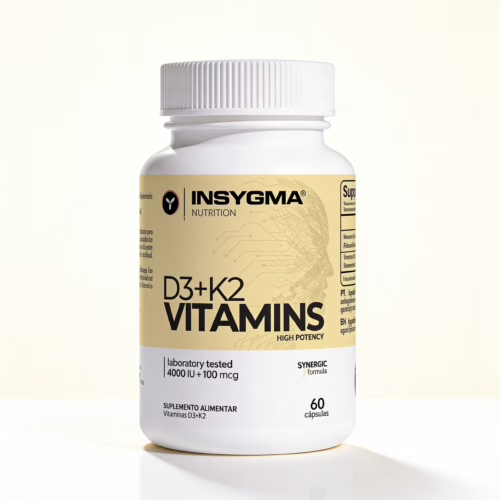
Vitamins D3 4000 IU + K2 100 µg · cholecalciferol and menaquinone-7
The science of vitamin D3 + K2
What the studies measured and what they found.
Randomized trials only
Tested in trials: what vitamin D and K2 do and what they do not do.
People with high blood vitamin D fall ill less often. But they also tend to get more sun, move more and be in better health to begin with. To find out what the supplement does, the only useful studies are those in which chance decides who takes vitamin D and who takes a placebo. This page counts only those. One non-randomized study on K2 and anticoagulants is also included, as a warning.
- 11 of 93
- benefits graded A or B
- 57 of 93
- results with no clear effect or with varied results
What is best confirmed
- BGood results Less type 2 diabetes In people who already have prediabetes 15% fewer new cases
- BGood results Fewer depression symptoms Small difference, on average Small decrease
- BGood results D3 raises levels more than D2 The form used in this product Raises it more
D3 and K2 together: 9 publications from 8 trials tested the two vitamins together, at other doses (this product contains 4000 IU + 100 µg). See what was tested
See all 93 resultsVitamin D3 + K2 / Evidence in humans
How to read the grades, arrows and counts
The arrow shows the direction of the measure: down when the measure fell, for example pain. It turns green when the change is an improvement. When the size was assessed, 1, 2 or 3 filled arrows mean a small, moderate or large effect. The = sign means no clear difference.
Few studies: only 1 or 2 controlled trials measured this result. Mixed results: the trials disagree. No grade: there is no controlled trial, only non-randomized studies.
When sorting by effect, the result with the largest magnitude in each topic counts. In a tie, the better grade of that result counts first, then alphabetical order. “Largest improvement with vitamin D or K2” considers benefits in comparisons where the effect of the vitamin can be isolated. “Largest measured effect” also includes markers and combined treatments.
The grade says how well it works: A, it works and is well studied; B, good results; C, few studies (only 1 or 2 controlled trials measured this result) or mixed results (the trials disagree); D, no clear effect. For safety, A and B mean it does not increase risk, C that there are doubts and F that it increases risk. The grade comes from fixed rules: the size of the effect in the main review, the number of trials and people, and the agreement between trials.
The three arrows point in the direction of the measure. For example, a shorter walking time points down. When the record documents the magnitude, one, two or three dark arrows correspond to a small, moderate or large effect. For other changes, one dark arrow shows only the direction. For standardized mean differences, the descriptive benchmarks are 0.2, 0.5 and 0.8 in absolute value.
The = sign means the test did not detect a difference. “Varied results” means the results diverged between studies, tests or time points. For case reports, the table states what was observed. The counts are of publications; one trial can give rise to several articles.
The records summarize the published abstract of each article; when the full text was read, the record says so. This is a targeted selection of up to 150 publications, not a new systematic review. Of the 159 study entries in the results (one study can appear in more than one), 123 come from fixed rules: the largest trials for each result, one publication per trial, and trials with 1,000 or more people. The other 36 are recorded exceptions: 29 studies cited in the summary, 5 publications of D3 and K2 together and 2 editorial choices.
| Topic | Measured result | Grade | Effect | Evidence |
|---|
D3 and K2 togetherWhat was tested Tested together in 9 publications, at other doses See details
What doses were tested?
- MK-7 100 µg + vitamin D 400 IU60 children on hemodialysis · 4 months · no placebo
- K2 90 µg + D3 400 IU + calcium311 adults in China · 1 year · with placebo
- MK-7 240 µg + D3 2000 IU151 adults with long COVID · 24 weeks · no placebo
- K2 720 µg + D3 1000 IU2 trials in Denmark (365 and 400 people) and a substudy · 2 years · with placebo
- MK-4 45 mg + vitamin D 400 IU + calcium78 women in Korea · 6 months
- MK-4 + D3, doses not stated in the abstract172 women in Japan · 2 years
- D3 + K2, doses not stated in the abstract38 people with diabetes and periodontitis · 6 months
Adding vitamin K to vitamin D increased bone density more than without it, in 8 trials with 971 people (low certainty). The effect of the combination with 4000 IU of D3 and 100 µg of MK-7 has not been studied.
See the studies on the combinationK2 and anticoagulantsWarfarin and acenocoumarol People who take anticoagulants should talk to their doctor first See details
What happens to the INR?
In volunteers taking anticoagulants such as acenocoumarol, 45 µg a day of MK-7 lowered the INR by about 40%, and even 10 to 20 µg affected it. People who take warfarin or acenocoumarol should not take K2 without talking to their doctor. It is a non-randomized study in volunteers, not a randomized trial: it is included only as a safety warning. Each capsule of this product contains 100 µg of MK-7.
See the studies with anticoagulantsSafetyHigh blood calcium Uncommon cases, almost always mild See details
How often does calcium rise?
- Studies
- 48
- People
- 19 833
In 48 studies with 19,833 people, vitamin D increased cases of high calcium in the blood and urine, with no clear link to the dose. These cases are uncommon and almost always mild. Kidney stones did not increase with vitamin D alone.
See the safety studiesThe 4000 IU doseTrials with 3200 to 4000 IU a day Slightly more high calcium: about 4 in every 1,000 people See details
What changed with high doses?
- Trials
- 22
- Daily dose
- 3200 to 4000 IU
In 22 trials with 3200 to 4000 IU a day, there were slightly more cases of high calcium (about 4 per 1,000 people), falls and hospital admissions; kidney stones and mortality did not change clearly. In the Calgary trial, 4000 and 10,000 IU a day for 3 years lowered forearm bone density compared with 400 IU, without changing bone strength. In 494 pregnant women, 4000 IU a day until delivery brought no safety differences compared with 400 or 2000 IU.
See the safety studiesFrequently Asked Questions
D3 or D2?
D3.
In 20 studies that compared the two forms, D3 raised blood vitamin D more. With D2, the rise was about 40% smaller.
See the studies on the formsEvery day or a large dose now and then?
Every day.
In 15 trials, large spaced-out doses did not prevent falls or fractures. A dose of 500,000 IU once a year even increased falls and fractures.
Annual dose studyHow much does blood vitamin D rise?
It depends on the dose.
In 136 articles, it rose more the higher the dose; the starting level and age also matter. With 400 to 800 IU a day, the rise was about 8 to 10 ng/mL.
See the dose studiesWhat is K2 for?
Together with D, it helped bone.
Adding vitamin K to vitamin D increased bone density in 8 trials, with low certainty. The doses tested were different from those in this product.
See what was testedIs it safe?
Yes.
Vitamin D and K2 are nutrients. In the 22 trials with 3200 to 4000 IU a day there was slightly more high calcium (about 4 per 1,000 people), almost always mild, and kidney stones did not increase with vitamin D alone. Do not add other vitamin D supplements without talking to your doctor. People who take warfarin or acenocoumarol should talk to their doctor before taking K2.
See the safety studiesINSYGMA Labs · 11 November 2026 · Back to top ↑