
 INSYGMA NUTRITION
Product science / Multivitamin
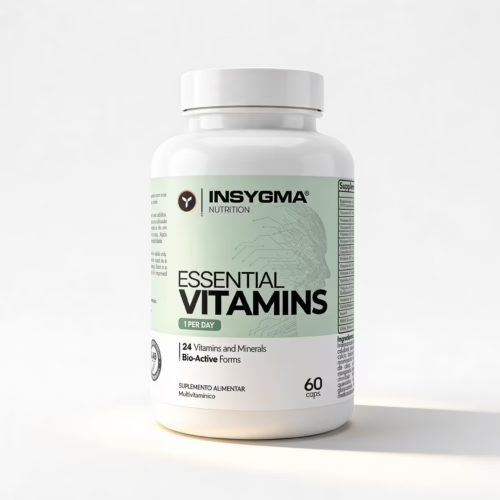
Multivitamin · vitamins and minerals in one capsule a day
The science of multivitamins
What the studies measured and what they found.
Randomized trials only
In the trials: far fewer neural tube defects with folic acid, and slightly less stress and tiredness.
People who take vitamins also tend to have other healthy habits. To find out what the supplement does, the only useful studies are those in which chance decides who takes the vitamins and who takes an identical capsule with nothing in it. This page counts only those.
- 8 of 78
- benefits graded A or B
- 57 of 78
- results with no clear effect or with varied results
We read the full text of 59 of the 147 publications and 29 of the 41 reviews on this page; for the others, the record was based on the abstract and says so. The main figure comes from the full text in 39 of the 78 results.
What is best confirmed
- AWell proven Far fewer neural tube defects With folic acid, before pregnancy Large decrease
- BGood results Slightly less stress In healthy people Small decrease
- BGood results Slightly less tiredness In healthy people Small decrease
Multivitamin / Evidence in humans
How to read the grades, arrows and counts
The arrow shows the direction of the measure: down when the measure fell, for example blood pressure. It turns green when the change is an improvement. When the size was assessed, 1, 2 or 3 filled arrows mean a small, moderate or large effect. The = sign means no clear difference.
Few studies: only 1 or 2 controlled trials measured this result. Mixed results: the trials disagree.
When sorting by effect, the result with the largest magnitude in each topic counts. In a tie, the better grade of that result counts first, then alphabetical order. “Largest improvement with these blends” considers benefits in comparisons where the effect of the blend can be isolated. “Largest measured effect” also includes markers and combined treatments.
The grade says how well it works: A, it works and is well studied; B, good results; C, few studies (only 1 or 2 controlled trials measured this result) or mixed results (the trials disagree); D, no clear effect. For safety, A and B mean it does not increase risk, C that there are doubts and F that it increases risk. The grade comes from fixed rules: the size of the effect in the main review, the number of trials and people, and the agreement between trials.
The three arrows point in the direction of the measure. For example, a shorter walking time points down. When the record documents the magnitude, one, two or three dark arrows correspond to a small, moderate or large effect. For other changes, one dark arrow shows only the direction. For standardized mean differences, the descriptive benchmarks are 0.2, 0.5 and 0.8 in absolute value.
The = sign means the test did not detect a difference. “Varied results” means the results diverged between studies, tests or time points. For case reports, the table states what was observed. The counts are of publications; one trial can give rise to several articles.
The records summarize each published article, some from the full text and others from the abstract only. This is a targeted selection of up to 150 publications, not a new systematic review. Of the 162 study entries in the results (one study can appear in more than one), 151 come from fixed rules: the largest trials for each result, one publication per trial, and trials with 1,000 or more people. The other 11 are recorded exceptions: 6 studies cited in the summary and 5 editorial choices.
| Topic | Measured result | Grade | Effect | Evidence |
|---|
High-dose beta-caroteneSmokers At high doses, more lung cancer in smokers See details
What was seen in the trials?
- Beta-carotene per day
- 30 mg
- People
- 18 314
In CARET, with 18,314 smokers and asbestos workers, 30 mg of beta-carotene with vitamin A a day increased lung cancer by 28%. That is why high-dose beta-carotene is not for smokers.
The beta-carotene in Bio-Active is far below the 30 mg a day used in CARET. If you smoke, talk to your doctor before taking supplements with beta-carotene.
See the cancer studiesVitamin K and warfarinAnticoagulants People who take warfarin should talk to their doctor first See details
Can it affect warfarin?
The vitamin K in some multivitamins can affect how warfarin works. If you take warfarin, talk to your doctor before you start.
Bio-Active contains vitamin K2 (MK-7).
See the safety studiesIn pregnancyFolic acid and micronutrients Folic acid protects; micronutrients help birth weight See details
What do the trials show?
In the Cochrane review, in 4 trials with 6,512 births, adding folic acid to the other vitamins greatly reduced neural tube defects. In the MRC trial, the other vitamins without folic acid did not protect.
In the Cochrane review (18 trials, 68,801 babies), multiple micronutrients reduced low-birth-weight babies by 12% compared with iron and folic acid (high certainty). The trials are mostly from low-income countries.
If you are planning a pregnancy, talk to your doctor about the dose of folic acid.
See the pregnancy studiesHigh-dose antioxidantsVitamins C and E, beta-carotene They do not reduce mortality; in the best trials, slightly more deaths See details
Is more better?
In the Cochrane review (78 trials, 296,707 people), antioxidants did not reduce mortality. In the 56 best-quality trials (244,056 people) there were even slightly more deaths (4%), mainly with beta-carotene and vitamin E. The analysis pools antioxidants taken alone with blends.
The exception is macular degeneration: in the Cochrane review, in people who already have macular degeneration, the antioxidant formula with zinc reduced progression to the advanced form (3 trials, 2,445 people).
See the mortality studiesFrequently Asked Questions
Does it protect the heart?
In the large trials, no.
In the two largest trials, with 14,641 doctors and 21,442 older adults, a daily multivitamin did not reduce heart attacks or strokes.
See the heart studiesDoes it help memory?
A little, in two recent trials.
Two recent trials (COSMOS), with 2,262 and 3,562 older people, saw a small improvement in memory with the multivitamin. In the Cochrane review, the 3 older trials of complete supplements had seen no effect.
See the memory studiesDoes it give more energy?
A little.
In 7 trials in healthy people, tiredness and stress fell a little. These are small, short trials.
See the energy studiesDoes it help you live longer?
No.
In the large 2018 review (10 trials), the multivitamin did not change mortality. High-dose antioxidants did not either, and in the best trials there were even slightly more deaths.
See the mortality studiesIs it safe?
Yes.
In the trials, the multivitamin showed no signs of harm, even at high doses (TACT). Two precautions: if you take warfarin, talk to your doctor before you start, because of the vitamin K; and if you smoke, avoid supplements with high-dose beta-carotene.
See what is knownINSYGMA Labs · 11 November 2026 · Back to top ↑