
 INSYGMA NUTRITION
Product science / Omega-3
Omega-3 · EPA and DHA from fish oil
The science of omega-3
What the studies measured and what they found.
Randomized trials only
In the trials, omega-3 lowers triglycerides, and slightly lowers blood pressure and depression symptoms.
People who eat more fish fall ill less often, but they also tend to have other healthy habits. To find out what the supplement does, the only useful studies are those in which chance decides who takes omega-3 and who takes an identical capsule without omega-3. This page counts only those.
- 12 of 81
- benefits graded A or B
- 58 of 81
- results with no clear effect or with varied results
What is best confirmed
- BGood results Lower triglycerides In people with high levels, with 2 to 4 g a day 20 to 33% lower
- BGood results Slightly lower blood pressure With 2 to 3 g a day 2.6 mmHg lower
- BGood results Fewer depression symptoms In people who already have depression Small decrease
Omega-3 / Evidence in humans
How to read the grades, arrows and counts
The arrow shows the direction of the measure: down when the measure fell, for example pain. It turns green when the change is an improvement. When the size was assessed, 1, 2 or 3 filled arrows mean a small, moderate or large effect. The = sign means no clear difference.
Few studies: only 1 or 2 controlled trials measured this result. Mixed results: the trials disagree.
When sorting by effect, the result with the largest magnitude in each topic counts. In a tie, the better grade of that result counts first, then alphabetical order. “Largest improvement with omega-3” considers benefits in comparisons where the effect of omega-3 can be isolated. “Largest measured effect” also includes markers and combined treatments.
The grade says how well it works: A, it works and is well studied; B, good results; C, few studies (only 1 or 2 controlled trials measured this result) or mixed results (the trials disagree); D, no clear effect. For safety, A and B mean it does not increase risk, C that there are doubts and F that it increases risk. The grade comes from fixed rules: the size of the effect in the main review, the number of trials and people, and the agreement between trials.
The three arrows point in the direction of the measure. For example, a shorter walking time points down. When the record documents the magnitude, one, two or three dark arrows correspond to a small, moderate or large effect. For other changes, one dark arrow shows only the direction. For standardized mean differences, the descriptive benchmarks are 0.2, 0.5 and 0.8 in absolute value.
The = sign means the test did not detect a difference. “Varied results” means the results diverged between studies, tests or time points. For case reports, the table states what was observed. The counts are of publications; one trial can give rise to several articles.
The records summarize the published abstract of each article; when the full text was read, the record says so. This is a targeted selection of up to 150 publications, not a new systematic review. Of the 147 study entries in the results (one study can appear in more than one), 141 come from fixed rules: the largest trials for each result, one publication per trial, and trials with 1,000 or more people. The other 6 are recorded exceptions: 5 studies cited in the summary and 1 editorial choice.
| Topic | Measured result | Grade | Effect | Evidence |
|---|
Omega-3 and heart rhythmAtrial fibrillation Slightly more cases above 1 g a day See details
What was seen in the trials?
- Trials
- 7
- People
- 81 210
In large heart trials, with people aged 65 on average, doses above 1 g a day slightly increased cases of atrial fibrillation, an irregular heart rhythm. The increase grows with the dose.
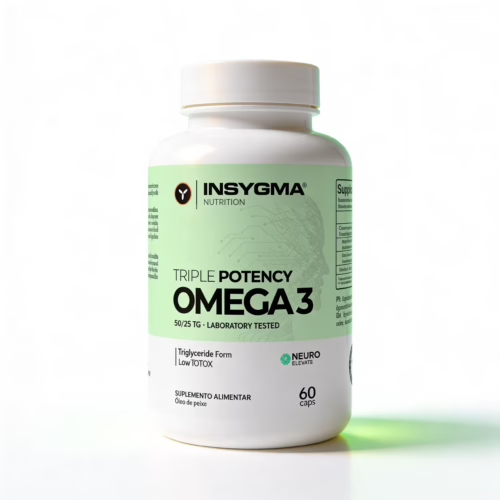
In numbers: with 4 g a day (REDUCE-IT), 3.1 in every 100 people went to hospital for fibrillation, versus 2.1 in 100 without omega-3. With about 0.84 g a day (VITAL), the difference was not clear: 3.7 versus 3.4 in 100. INSYGMA products provide 1.4 to 1.5 g a day with 2 capsules.
If you have atrial fibrillation or palpitations, talk to your doctor before taking it.
See the safety studiesOmega-3 and anticoagulantsWarfarin and others People who take anticoagulants should talk to their doctor first See details
Does it increase bleeding?
In 11 trials with 120,643 people, omega-3 did not increase bleeding overall, including brain and gut bleeding. With pure EPA at a high dose, the relative risk rose, but the absolute increase was small (about 0.6%). In OPERA, before heart surgery, there was no more serious bleeding.
Outside the trials, there are isolated reports of serious bleeding in people who took fish oil together with warfarin, after a fall or a head injury.
Practical advice: people who take anticoagulants should talk to their doctor before taking omega-3.
See the safety studiesPure EPA at a medicinal dose4 g a day Two large trials with opposite results See details
What did REDUCE-IT and STRENGTH show?
- Daily dose
- 4 g
- People
- 21 257
REDUCE-IT gave 4 g a day of pure EPA, a medicine, to 8,179 people and reduced heart events by 25%. STRENGTH gave 4 g a day of EPA + DHA to 13,078 people and changed nothing. REDUCE-IT used mineral oil as the comparison, which is debated. It is a dose almost three times higher than that of these products.
See the heart studiesTG, rTG or ethyl ester?The form of the oil Small differences See details
Is one form better absorbed?
In a trial with 150 people and the same dose, the omega-3 index rose faster and higher with re-esterified triglyceride (rTG) than with ethyl ester. In other trials, after 4 to 12 weeks, blood EPA and DHA were similar with ethyl ester, triglyceride, rTG or krill. Side effects were similar.
See the studies on the formsFrequently Asked Questions
Does it prevent heart attacks?
It makes almost no difference.
In 86 trials with 162,796 people, heart attacks, strokes and heart deaths taken together hardly changed. Heart attacks may fall slightly.
See the heart studiesDoes it lower triglycerides?
Yes.
By about 15% in general, more so the higher the dose. In people with high levels, 2 to 4 g a day of pure EPA lowered them by 20 to 33%. This is the most reliable effect of omega-3.
See the triglyceride studiesDoes it help memory?
In people who already have mild decline, it may help.
In people who already have mild memory decline, 12 small studies show a moderate improvement, with low certainty. For prevention, no: in 38 trials with almost 50,000 adults without dementia, memory did not change.
See the memory studiesIs it safe?
Yes.
Omega-3 is a nutrient found in fish. In 90 trials, there were no serious effects attributed to omega-3; there was slightly more diarrhea and taste change. Above 1 g a day, the large heart trials saw slightly more atrial fibrillation (with 4 g a day, about 1 more person in every 100). If you have fibrillation or palpitations, or take anticoagulants, talk to your doctor.
See what is knownIn pregnancy, does it prevent preterm birth?
It was not confirmed.
A 2018 review said it did. The two largest trials, with more than 11,000 pregnant women, did not confirm it.
See the pregnancy studiesINSYGMA Labs · 11 November 2026 · Back to top ↑