
 INSYGMA NUTRITION
Product science / Melatonin
Melatonin · taken by mouth
The science of melatonin
What the studies measured and what they found.
Randomized trials only
In the trials: less jet lag, children with insomnia falling asleep faster and lower blood pressure during the night.
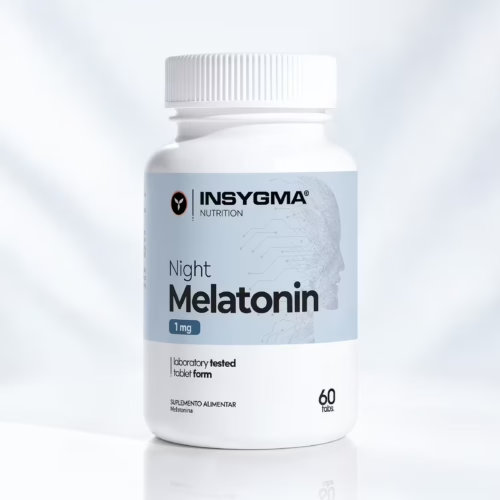
To find out what the supplement does, the only useful studies are those in which chance decides who takes melatonin and who takes an identical capsule without melatonin. This page counts only those, with melatonin taken by mouth. The doses varied from study to study; this product contains 1 mg.
- 8 of 100
- benefits graded A or B
- 57 of 100
- results with no clear effect or with varied results
What is best confirmed
- BGood results Less agitation on waking from anesthesia Children having surgery, 4 trials, 259 children About 60% less
- BGood results Less menstrual pain in endometriosis 3 trials that agree Large decrease
- BGood results Better sleep in breast cancer 3 trials, all in favor Large improvement
Melatonin / Evidence in humans
How to read the grades, arrows and counts
The arrow shows the direction of the measure: down when the measure fell, for example the time to fall asleep. It turns green when the change is an improvement. When the size was assessed, 1, 2 or 3 filled arrows mean a small, moderate or large effect. The = sign means no clear difference.
Few studies: only 1 or 2 controlled trials measured this result. Mixed results: the trials disagree.
When sorting by effect, the result with the largest magnitude in each topic counts. In a tie, the better grade of that result counts first, then alphabetical order. “Largest improvement with melatonin” considers benefits in comparisons where the effect of melatonin can be isolated. “Largest measured effect” also includes markers and combined treatments.
The grade says how well it works: A, it works and is well studied; B, good results; C, few studies (only 1 or 2 controlled trials measured this result) or mixed results (the trials disagree); D, no clear effect. For safety, A and B mean it does not increase risk, C that there are doubts and F that it increases risk. The grade comes from fixed rules: the size of the effect in the main review, the number of trials and people, and the agreement between trials.
The three arrows point in the direction of the measure. For example, a shorter walking time points down. When the record documents the magnitude, one, two or three dark arrows correspond to a small, moderate or large effect. For other changes, one dark arrow shows only the direction. For standardized mean differences, the descriptive benchmarks are 0.2, 0.5 and 0.8 in absolute value.
The = sign means the test did not detect a difference. “Varied results” means the results diverged between studies, tests or time points. For case reports, the table states what was observed. The counts are of publications; one trial can give rise to several articles.
The rows and grades come from a check by the INSYGMA Labs team, carried out on systematic reviews and randomized trials. Each row shows the main review and the figure that decides the grade. Rows that the team could only read from the abstract were left out. When a review includes trials from a center with several retracted studies, those trials do not count toward the grade. The trials cited have a short record; the full record of each trial is not yet on this page. The counts are of publications; one trial can give rise to several articles.
| Topic | Measured result | Grade | Effect | Evidence |
|---|
The 1 mg doseWhat the trials used The doses varied widely See details
Do the results apply to 1 mg?
The trials used different doses and, for most results, there is no separate estimate for 1 mg. For jet lag, the trials used 5 to 8 mg a day. In children having surgery, the dose was calculated by body weight. This product contains 1 mg per dose.
See the sleep studiesSleepiness and mild effectsMainly with high doses Mild, and serious effects did not increase See details
What was seen in the trials?
With doses of 10 mg or more, 10 times that of this product, there were more mild effects than with placebo, such as sleepiness, in 4 trials in adults. In children and adolescents, mild effects were slightly more frequent, about 6 more cases in every 100, and serious effects did not increase in 11 studies. In a small study without a comparison group, 13 patients with advanced cancer took 1000 mg every night for up to 11 months, and the only effect was sleepiness in one of them (Lissoni 2020, in a journal not indexed in PubMed). In a study of 31 patients with amyotrophic lateral sclerosis, 300 mg of melatonin every night (as a suppository) for up to 2 years caused no adverse effects (Weishaupt 2006, without a comparison group). In a trial with 300 mg a day taken together with several medicines that the liver also processes (paracetamol, metamizole, omeprazole, ibuprofen and others), 3 of 4 people had a rise in liver enzymes, which returned to normal on stopping (Bejarano 2026).
Take it close to bedtime. If it makes you sleepy, avoid driving afterward. If you take several medicines, talk to your doctor first before high doses.
See the safety studiesAntioxidant?Blood markers Mixed results See details
What do blood tests show?
In a review of 15 studies, the blood's antioxidant capacity rose with melatonin, but the studies vary a lot from one another. Malondialdehyde, a marker of oxidative damage, and antioxidant enzymes did not change clearly. These are blood measurements, not benefits you can feel.
See the oxidative stress studiesFrequently Asked Questions
Does it help you fall asleep?
In children and adolescents with insomnia, yes. In adults, the difference is small.
Children and adolescents with insomnia fell asleep about 18 minutes faster and slept about half an hour longer. Adults with insomnia fell asleep about 5 minutes faster, a very small effect.
See the sleep studiesDoes it help with jet lag?
Yes, on eastward flights.
In the Cochrane review, jet lag symptoms fell moderately in 4 trials. The trials used 5 to 8 mg a day; there is no separate estimate for 1 mg.
See the jet lag studiesDoes it improve sleep quality?
A little, in one of the reviews.
In a review of 14 studies, sleep quality improved a little; in a more recent review, the difference was not clear. In shift workers, daytime sleep lasted about 24 minutes longer.
See the sleep studiesIs it an antioxidant?
The results are mixed.
The blood's antioxidant capacity rose in one review, but the studies vary a lot, and markers of oxidative damage did not change clearly.
See what is knownIs it safe?
In the trials, the effects were mild.
With doses of 10 mg or more, there were more mild effects such as sleepiness; serious effects did not increase. This product contains 1 mg. During pregnancy or breastfeeding, for children, or if you take medicines, talk to your doctor first.
See what is knownINSYGMA Labs · 17 November 2026 · Back to top ↑