
 INSYGMA NUTRITION
Product science / GlyNAC and NAC
Glycine + NAC, or NAC alone, by mouth
The science of GlyNAC and NAC
What the studies measured and what they found.
Randomized trials only
In the trials: with GlyNAC, glutathione more than tripled in older adults who had low levels; with NAC, fewer exacerbations of chronic bronchitis and COPD.
To find out what the supplement does, the only useful studies are those in which chance decides who takes NAC and who takes an identical capsule without NAC. This page counts only those, with NAC taken by mouth, alone or with glycine (GlyNAC).
For GlyNAC there are only 2 trials, both small and with doses far above those of the product. The measured effects were large, but with so few trials the GlyNAC rows stay at C or D. The rows graded A or B are for NAC.
- 2 of 57
- benefits graded A or B
- 34 of 57
- results with no clear effect or with varied results
The largest measured effects, with GlyNAC
- CFew studies Glutathione more than tripled 1 controlled trial, 24 older adults, 16 weeks, no test between the groups 0.4 to 1.3 mmol/L; no change in the placebo group
- CFew studies Much lower markers of inflammation The same trial, 16 weeks IL-6 down 78%, TNF-α down 54%
- CFew studies Insulin resistance 64% lower The same trial, older adults without known diabetes 10.8 to 3.9; up 5% in the placebo group
What is best confirmed
- BGood results Fewer exacerbations of chronic bronchitis Review of 10 studies, 400 to 600 mg per day About 19% fewer
- BGood results Fewer people with exacerbations in COPD 11 studies, 3,093 people with COPD or chronic bronchitis About 12% fewer
- ASafe Side effects no different from placebo 8 studies, 2,297 people with COPD or chronic bronchitis No increase
GlyNAC and NAC / Evidence in humans
How to read the grades, arrows and counts
The arrow shows the direction of the measure: down when the measure fell, for example bronchitis exacerbations. It turns green when the change is an improvement. When the size was assessed, 1, 2 or 3 filled arrows mean a small, moderate or large effect. The = sign means no clear difference.
Few studies: only 1 or 2 controlled trials measured this result. Mixed results: the trials disagree.
When sorting by effect, the result with the largest magnitude in each topic counts. In a tie, the better grade of that result counts first, then alphabetical order. “Largest improvement with NAC” considers benefits in comparisons where the effect of NAC can be isolated. “Largest measured effect” also includes markers.
The grade says how well it works: A, it works and is well studied; B, good results; C, few studies (only 1 or 2 controlled trials measured this result) or mixed results (the trials disagree); D, no clear effect. For safety, A and B mean it does not increase risk, C that there are doubts and F that it increases risk. The grade comes from fixed rules: the size of the effect in the main review, the number of trials and people, and the agreement between trials.
The GlyNAC trials are few and small, but they are included because they are the basis of the product; that is why the GlyNAC rows can only be graded C or D. In the 16-week GlyNAC trial, the authors measured the changes within each group and did not compare the groups with each other. In those rows, the effect size (the arrows) is the difference between the change in the GlyNAC group and the change in the placebo group, as a percentage of the placebo group's baseline value, calculated from the published means.
The three arrows point in the direction of the measure. When the review documents the magnitude, one, two or three dark arrows correspond to a small, moderate or large effect. For other changes, one dark arrow shows only the direction.
The = sign means the test did not detect a difference. “Varied results” means the results diverged between studies, tests or time points. The counts are of publications; one trial can give rise to several articles.
The records summarize the full text of each article; those that could only be based on the abstract say so under limitations. When a result comes from a review, the review is shown. This is a targeted selection, not a new systematic review. Left out are NAC given intravenously, inhaled, or applied to the skin or in the mouth, studies without a comparison group, and results that could only be read from the abstract.
| Topic | Measured result | Grade | Effect | Evidence |
|---|
GlyNACGlycine + NAC together Large effects, in small trials See details
What did the GlyNAC trials show?
In a trial with 24 older adults with low glutathione, 16 weeks of GlyNAC made red blood cell glutathione more than triple, from 0.4 to 1.3 mmol/L (+225%); in the placebo group it did not change (0.4). In the same group, markers of inflammation fell sharply (IL-6 down 78%, TNF-α down 54%) and insulin resistance fell by 64%; in the placebo group they barely changed. The authors measured the changes within each group and did not compare the two groups with each other.
In another trial, with 117 healthy older adults, 2 weeks of GlyNAC did not change glutathione overall; it rose in the subgroup that had low levels.
The doses were much higher than those of the product: about 7 g/day of each in the first trial (for 70 kg), and 1.2 to 3.6 g of each in the second.
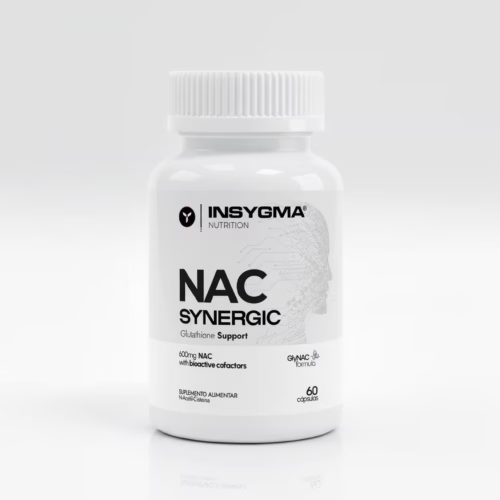
See the GlyNAC studiesWhat dose was studied?NAC 600 mg and NAC Synergic In the lungs, the product's dose See details
Did the trials use the products' dose?
In the chronic bronchitis trials, the dose was 400 to 600 mg of NAC per day. That is 1 capsule of NAC 600 mg, or 3 capsules of NAC Synergic, which add 600 mg of glycine.
The GlyNAC trials used much higher doses, and many trials in other areas used 1,200 to 2,700 mg of NAC per day. The page gives the dose for each result.
See the lung studiesStomach complaintsWith high doses Mild See details
What was seen in the trials?
With doses of 1.2 to 2.7 g per day, nausea and heartburn were more frequent than with placebo: for example, 41 of 59 people versus 25 of 61, with 2 g per day. In 8 studies with 2,297 people with COPD or chronic bronchitis, side effects were as frequent as with placebo.
If you notice stomach discomfort, take the capsules with a meal.
See the safety studiesFrequently Asked Questions
Does it help in chronic bronchitis?
Yes, with fewer exacerbations.
In a review of 10 studies in people with chronic bronchitis, 400 to 600 mg of NAC per day led to about 19% fewer exacerbations than placebo. In another review, of 11 studies with 3,093 people with COPD or chronic bronchitis, there were about 12% fewer people with exacerbations.
See the lung studiesDoes it improve breathing?
Lung function does not change.
In a review of 6 studies with 1,197 people with COPD, the air blown out in the first second (FEV1) stayed the same with NAC. The effect seen in the trials is on exacerbations, not on lung capacity.
See the lung studiesDoes it raise glutathione?
Yes, in people with low levels: it more than tripled.
In 24 older adults with low glutathione, red blood cell glutathione went from 0.4 to 1.3 mmol/L over 16 weeks of GlyNAC (+225%), with no change in the placebo group; the authors did not test the difference between the groups. In healthy older adults, 2 weeks of GlyNAC did not change it overall, but it rose in the subgroup that had low levels. These are 2 trials, with doses far above those of the product, so the grade is C.
See the glutathione studiesDoes it help strength and walking in older people?
They improved in a small trial.
In the trial with 24 older adults, walking speed became 19% faster in the GlyNAC group, versus 5% in the placebo group, and strength rose only in the GlyNAC group. The authors did not compare the two groups with each other; this still needs to be confirmed in larger trials.
See the strength studiesIs it safe?
Yes, in trials with thousands of people.
In 8 studies with 2,297 people with COPD or chronic bronchitis, side effects were as frequent with NAC as with placebo. In the 2 GlyNAC trials no problems were reported. With high doses, nausea and heartburn are more frequent. If you have a serious lung disease or take medicines, talk to your doctor before starting.
See the safety studiesINSYGMA Labs · 17 November 2026 · Back to top ↑