
 INSYGMA NUTRITION
Product science / Vitamin E
Vitamin E · tocopherols, oral
The science of vitamin E
What the studies measured and what they found.
Randomized trials only
In trials: more people with epilepsy responding to treatment, less itching in atopic dermatitis, and about 10% fewer clot-related strokes.
To know what a supplement actually does, only studies where chance decides who takes vitamin E and who takes an identical capsule without vitamin E count. This page only includes those, with oral vitamin E. Vitamin E has been tested in some of the largest prevention trials, involving tens of thousands of people; for most outcomes, there was no clear effect.
- 2 of 42
- benefits graded A or B
- 38 of 42
- results with no clear effect or with varied results
The largest measured effects
- BGood results Epilepsy: seizures reduced by more than three-quarters, alongside treatment Brain and nerves About 73% more patients with far fewer seizures
- CFew studies Itching in atopic dermatitis Skin, hair and nails Less itching, in 2 trials
- BGood results Clot-related (ischemic) stroke Heart and circulation About 10% fewer clot-related strokes
Vitamin E / Evidence in humans
How to read the grades, arrows and counts
The arrow shows the direction of the measure: pointing down when it decreased, for example strokes. It turns green when the change is an improvement. When effect size was assessed, 1, 2, or 3 filled arrows mean a small, moderate, or large effect. The = sign means no clear difference.
Few studies: only 1 or 2 controlled trials measured this result. Mixed results: the trials disagree.
When sorting by effect, the outcome with the largest magnitude in each topic counts. In case of a tie, the better grade of that outcome comes first, followed by alphabetical order. "Largest improvement with vitamin E" considers benefits in comparisons where the effect of vitamin E can be isolated. "Largest measured effect" also includes markers and treatment combinations.
The grade says how well it works: A, it works and is well studied; B, good results; C, few studies (only 1 or 2 controlled trials measured this result) or mixed results (the trials disagree); D, no clear effect. For safety, A and B mean it does not increase risk, C that there are doubts and F that it increases risk. The grade comes from fixed rules: the size of the effect in the main review, the number of trials and people, and the agreement between trials.
The three arrows point in the direction of the measure. For example, a shorter walking time points down. When the record documents the magnitude, one, two or three dark arrows correspond to a small, moderate or large effect. For other changes, one dark arrow shows only the direction. For standardized mean differences, the descriptive benchmarks are 0.2, 0.5 and 0.8 in absolute value.
The = sign means the test did not detect a difference. “Varied results” means the results diverged between studies, tests or time points. For case reports, the table states what was observed. The counts are of publications; one trial can give rise to several articles.
Trial cards list the form, dose, and duration when the team recorded them; those based on the abstract state this under limitations, and grades assigned from a review abstract state this in the grade rationale. Each outcome shows the review or trial on which the grade is based and the other publications it cites, including excluded ones, with the reason: 19 reviews and 19 trials in total. We show all publications cited across the outcomes; this is not a new systematic review.
| Topic | Measured result | Grade | Effect | Evidence |
|---|
Stroke: both sidesFrom clots and from bleeding Slightly more bleeding strokes See details
What was seen in the trials?
In 5 trials with over 90,000 people, there were about 10% fewer clot-related strokes with vitamin E. In the same trials, bleeding strokes were slightly more frequent: about 0.8 extra cases per 1,000 people over the course of the trials. Overall, the total number of strokes did not change (7 trials).
If you take blood thinners or antiplatelet medications, talk to your doctor before starting.
See the safety studiesNatural or synthetic?The form of vitamin E Many trials used alpha-tocopherol only See details
Which vitamin E was studied?
Several of the large trials used alpha-tocopherol only. In the Physicians' Health Study II, for example, physicians took 400 IU of synthetic alpha-tocopherol every other day.
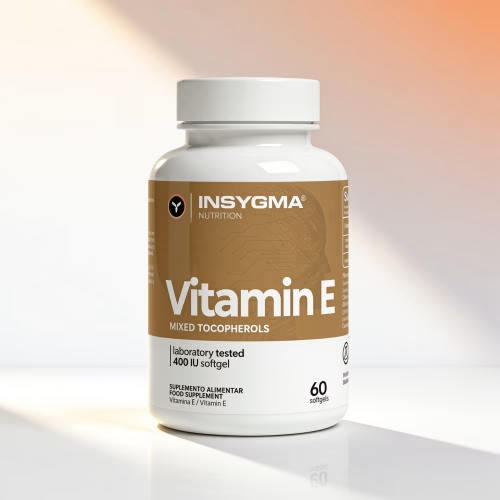
Each capsule of this product provides 268 mg of naturally sourced alpha-tocopherol (400 IU) and 15 mg of mixed tocopherols.
See the resultsFrequently Asked Questions
What about the heart and circulation?
About 10% fewer clot-related strokes.
In 5 trials with over 90,000 people, there were fewer clot-related strokes with vitamin E. In the same trials, bleeding strokes were slightly more frequent, so total strokes did not change. Leg pain when walking did not improve.
See the heart studiesDoes it help with epilepsy?
Alongside treatment, more patients with far fewer seizures.
In a review of 8 studies with 675 people, children and adults, adding vitamin E to epilepsy medications increased by about 73% the number of patients whose seizures were reduced by more than three-quarters. Vitamin E does not replace medication: always talk to your doctor.
See the epilepsy studiesDoes it help memory?
In trials, there was no clear effect.
In healthy women aged 65 or older, in older men, and in people with Alzheimer's disease or mild cognitive impairment, vitamin E did not clearly change memory or dementia risk.
See the memory studiesWhat about the skin?
Less itching in atopic dermatitis, in 2 trials.
In 2 trials of people with atopic dermatitis, itching decreased moderately with vitamin E. These are few studies.
See the skin studiesIs it safe?
Yes.
Vitamin E is a nutrient found in foods such as vegetable oils and nuts. In large trials, bleeding strokes were slightly more frequent: about 0.8 extra cases per 1,000 people over the course of the trials. If you take blood thinners or antiplatelet medications, talk to your doctor before starting.
See what is knownINSYGMA Labs · November 20, 2026 · Back to top ↑