
 INSYGMA NUTRITION
Product science / Coenzyme Q10
Coenzyme Q10 · with selenium, by mouth
The science of coenzyme Q10
What the studies measured and what they found.
Randomized trials only
In the trials: fewer deaths and fewer hospital admissions in heart failure, alongside usual treatment.
To know what the supplement does, the only useful studies are those in which chance decides who takes Q10 and who takes an identical capsule without Q10. This page counts only those, with Q10 taken by mouth. Many trials were done in people with heart or metabolic conditions, and almost none added selenium.
- 8 of 120
- benefits graded A or B
- 70 of 120
- results with no clear effect or with varied results
What is best confirmed
- AWell proven Fewer deaths in heart failure Alongside usual treatment, 11 studies About 36% fewer
- AWell proven Fewer hospital admissions in heart failure 3 trials, 1,034 people About 40% fewer
- BGood results More pregnancies with in vitro fertilization Women with few eggs, 6 trials More confirmed pregnancies
Coenzyme Q10 / Evidence in humans
How to read the grades, arrows and counts
The arrow shows the direction of the measure: pointing down when the measure fell, for example deaths. It turns green when the change is an improvement. When the size was assessed, 1, 2 or 3 solid arrows mean a small, moderate or large effect. The = sign means no clear difference.
Few studies: only 1 or 2 controlled trials measured this result. Mixed results: the trials disagree.
When sorting by effect, the result with the largest magnitude in each topic counts. In case of a tie, the best grade of that result counts first, then alphabetical order. “Largest improvement with Q10” considers benefits in comparisons where the effect of Q10 can be separated. “Largest measured effect” also includes blood markers.
The grade says how well it works: A, it works and is well studied; B, good results; C, few studies (only 1 or 2 controlled trials measured this result) or mixed results (the trials disagree); D, no clear effect. For safety, A and B mean that it does not increase risk and C that there are doubts. The grade comes from fixed rules: the size of the effect in the main review, the number of trials and of people, and the agreement between trials.
The three arrows point in the direction of the measure. When the record documents the magnitude, one, two or three dark arrows correspond to a small, moderate or large effect. For the other changes, one dark arrow shows only the direction. For standardized mean differences, the descriptive reference points are 0.2, 0.5 and 0.8 in absolute value.
The = sign means that the test did not detect a difference. The counts are of publications; one trial can give rise to several articles. Grades marked as provisional are still awaiting a reading of the full text or a final check.
The records summarize each published article; those that could only be based on the abstract say so in the limitations. We show all the publications cited in the results; this is not a new systematic review. There are 60 articles and 46 reviews. Trials from a center with several retracted studies are left out, and reviews that pool them do not count toward the grade. Studies of Q10 with selenium, of selenium alone and of mixtures with other ingredients are not included in the Q10 grades.
| Topic | Measured result | Grade | Effect | Evidence |
|---|
Do you take warfarin?Anticoagulants Talk to your doctor first See details
What is known about Q10 with warfarin?
In an observational study with 171 adults taking warfarin, those who said they had taken Q10 reported more bleeding; the study does not prove that Q10 is the cause. In a crossover trial with 24 adults, 100 mg of Q10 a day for 4 weeks did not change the warfarin dose or the INR, but such a small trial does not rule out an interaction.
If you take warfarin or another anticoagulant, talk to your doctor before starting.
See the warfarin studiesUbiquinol or ubiquinone?Forms and absorption The product matters, not just the form See details
Is one form better absorbed?
In a crossover trial with 21 older people, a single 100 mg dose of a water-soluble ubiquinone syrup gave about 2.4 times more Q10 in the blood than a ubiquinone capsule; with a ubiquinol capsule, the ratio was 1.7. In the blood, Q10 appeared mainly as ubiquinol, whatever form was taken.
These studies compare specific products and do not show that one form is better in general. In several studies Q10 was taken with the main meal, but none compared this with taking it on an empty stomach.
See the studies on the formsWhat about selenium?The second ingredient Counted separately See details
Are there studies with Q10 and selenium together?
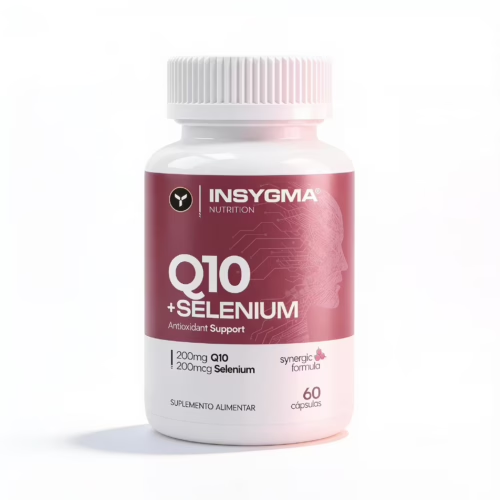
Only one trial used the same combination as this product: KiSel-10, with 443 older Swedish adults who took 200 mg of Q10 and 200 µg of selenium a day. As it is a single trial, it has no grade on this page, and its effect cannot be attributed to each ingredient separately.
The large trials with selenium alone, without Q10, saw no fewer deaths, so they do not count toward the Q10 grades either.
See safetyDo you take statins?Cholesterol medicines May ease pain a little See details
Does Q10 help with muscle pain from statins?
In a 2025 review, in 6 trials with 329 people taking statins, Q10 alone (100 to 600 mg a day, for 30 to 90 days) lowered muscle pain by 0.58 points on average, about 16% less than in the control group. But only 3 of the 6 trials saw an improvement, and two earlier reviews found no clear effect.
Do not stop your statin on your own: talk to your doctor if you have muscle pain.
See the statin studiesFrequently Asked Questions
Does it help the heart?
In heart failure, alongside usual treatment, yes.
In a review of 11 studies with 2,070 adults with heart failure, there were about 36% fewer deaths with Q10, and in 3 trials with 1,034 adults there were about 40% fewer hospital admissions. For blood pressure, systolic pressure fell a little, but the trials varied a lot.
See the heart studiesDoes it give more energy?
It may lower fatigue, but not in everyone.
In a 2022 review, the 10 trials with Q10 alone showed less fatigue than with placebo, in people who were healthy or had various conditions. In the 3 trials with healthy people only, the difference was not clear.
See the fatigue studiesDoes it help with migraine?
There may be fewer attacks, about 1.5 fewer per month.
In a review of 5 studies with 259 adults with episodic migraine, Q10 reduced attacks by 1.52 per month on average compared with placebo. The intensity and duration of attacks did not change clearly.
See the migraine studiesDoes it help with fertility?
With in vitro fertilization, in women with few eggs, there were more pregnancies.
In a review of 6 trials with 1,447 women with diminished ovarian reserve, taking Q10 before treatment led to more clinical pregnancies. In infertile men, Q10 alone did not clearly change pregnancies in their partners.
See the fertility studiesIs it safe?
In the trials, side effects were as frequent as without Q10.
In a review of 9 studies with 1,125 adults with heart failure, there were side effects in 47 of 554 people with Q10 and in 59 of 571 in the control group. If you take warfarin or another anticoagulant, talk to your doctor before starting.
See what is known about warfarinINSYGMA Labs · 18 November 2026 · Back to top ↑